Replacing Spreadsheets and Email in Theater Production Management: A Coachella Valley Rep Story

Adam Karsten, Executive Artistic Director at Coachella Valley Repertory, agreed to become a Vivorium advisor after seeing early versions of VivoCue.
Most productions run on tools that were never built for theater.
Email holds part of the production. Text threads hold another part. Spreadsheets, shared calendars, paper notes, and the memory of whoever happens to be in the room hold the rest. No single place holds all of it.
Directors at every level of theater recognize the result. Time that belongs to the work goes to finding the latest version of a schedule, confirming who has a conflict, and answering the same question for the third time.
Coachella Valley Repertory decided to stop working that way.
CVRep is a professional regional theater led by Executive Artistic Director Adam Karsten. The company became an early adopter of VivoCue by Vivorium, a production management platform built specifically for theater. Karsten describes what drew him to it plainly:
"What immediately caught my attention was that VivoCue was designed for theater. That sounds simple, but it is actually a big distinction."
This spotlight covers what changed at CVRep, and why the lessons apply well beyond a professional stage.
Topics covered:
• Why general-purpose tools create administrative noise in a production
• Building one shared source of production information
• How communication changes when information has a home
• Managing a rehearsal schedule that changes every day
• What it takes to bring a new system into an established company
Getting started
What first drew you to VivoCue?
"So much of what we do in theater is managed through a collection of tools that were never really designed for the way a production works like email, spreadsheets, shared calendars, text messages, paper notes, shared documents, and a dozen other systems. This was appealing to us because it seemed to understand that theater has its own workflow, and its own very particular challenges. These challenges were something our production was aware of (communication being a big one), and we were seeking and discussing ways to improve upon them.
I saw VivoCue as an opportunity to bring some of that information together in a way that actually made sense for theater people."
What did a typical production week look like before?
"A typical production week used to mean being pulled in a dozen directions simultaneously.
You might be dealing with an audition question in the morning, a rehearsal conflict an hour later, a production meeting, an actor who needs information, a parent who needs clarification, a designer asking for details or measurements, and then trying to remember that you promised someone an answer two days ago. The details of all of that were spread out. Email contained some of it. Text messages contained some of it. Spreadsheets contained some of it. Calendars contained other pieces. And then there was the information that was simply living inside someone's head.
That creates a tremendous amount of administrative noise. And the more productions and programs you are running, the more that noise takes you away from the artistic work."
Was there a moment when you knew the old tools were not working?
"For me, it wasn't one dramatic moment. It was the accumulation of hundreds of little moments.
You realize that you're spending valuable artistic time trying to find the latest version of a schedule, confirming who has a conflict, answering the same question for three different people, or reconstructing information that somebody already entered somewhere else.
At some point you realize, I'm running a professional theater, but I'm managing parts of it like a very sophisticated group project."
The work
How has a shared production platform changed the way you and your team work?
"The biggest change was that it gave us a shared source of information on the production.
As a director, I don't want technology dictating how I work artistically. I want technology to remove the administrative obstacles so I can concentrate on the artistic work.
VivoCue gives our production team a common place to organize the information surrounding a production. It creates more clarity about who needs to know what, when they need to know it, and where they can find it."
How has communication across the production changed?
"Communication is everything in theater and was one of our management / design teams' biggest issues. A production is a complicated ecosystem of people, and everyone is dependent on everyone else. Theater is collaborative. When communication breaks down, even a small misunderstanding can become a major problem.
Having a dedicated production platform creates a level of transparency and consistency that is extremely valuable. Instead of information being scattered across emails and texts, people have a place they know to go.
It also changes the culture a little. People become more responsible for staying informed because the information is accessible to them."
CVRep still casts through industry submission channels. Where does VivoCue fit into auditions?
"As a professional regional theater, we still use an industry casting submission service for agent and manager submissions. But implementing the VivoCue platform has been valuable for CVRep because we're expanding our reach and bringing in some professional local artists from the Coachella Valley. When you're working at a professional regional theater level, your audition process has to reflect the professionalism of the organization."
Rehearsal schedules change constantly. How do you handle those changes now?
"Anyone who has run a production knows that the rehearsal schedule is a living document. As a director, I often update the following day's rehearsal schedule with the Stage Manager after that day of rehearsal. Someone's availability changes, a rehearsal room changes, a designer needs time, a scene moves, an actor has a conflict... and you're rebuilding everything. The value of VivoCue is that you can manage those changes within a system designed to understand the relationships between all of those moving pieces."
The human side
Directors carry the artistic vision and most of the logistics. What has it been like to share some of that load?
"It feels like we won't fall behind. Theater people are used to carrying large amounts of information in their heads (just ask my wife who is a choreographer). We almost wear that as a badge of honor. But there is a difference between being committed and being overloaded.
Having better systems gives me more capacity to care about the things that matter. The artists, the design team, the audience, and the work."
What gave you the confidence to adopt a new platform early?
"We meet as a staff after each production, and I believed that the problem was real.
When someone comes along and says, "We've built something specifically for theater," my first question is always: Do they know how theater works? After being walked through VivoCue, I saw that they do. The platform was trying to solve actual problems that theater organizations face every day.
If something can make our artists' experience better and our staff more efficient, I'm willing to try it."
Share this post
Related resources

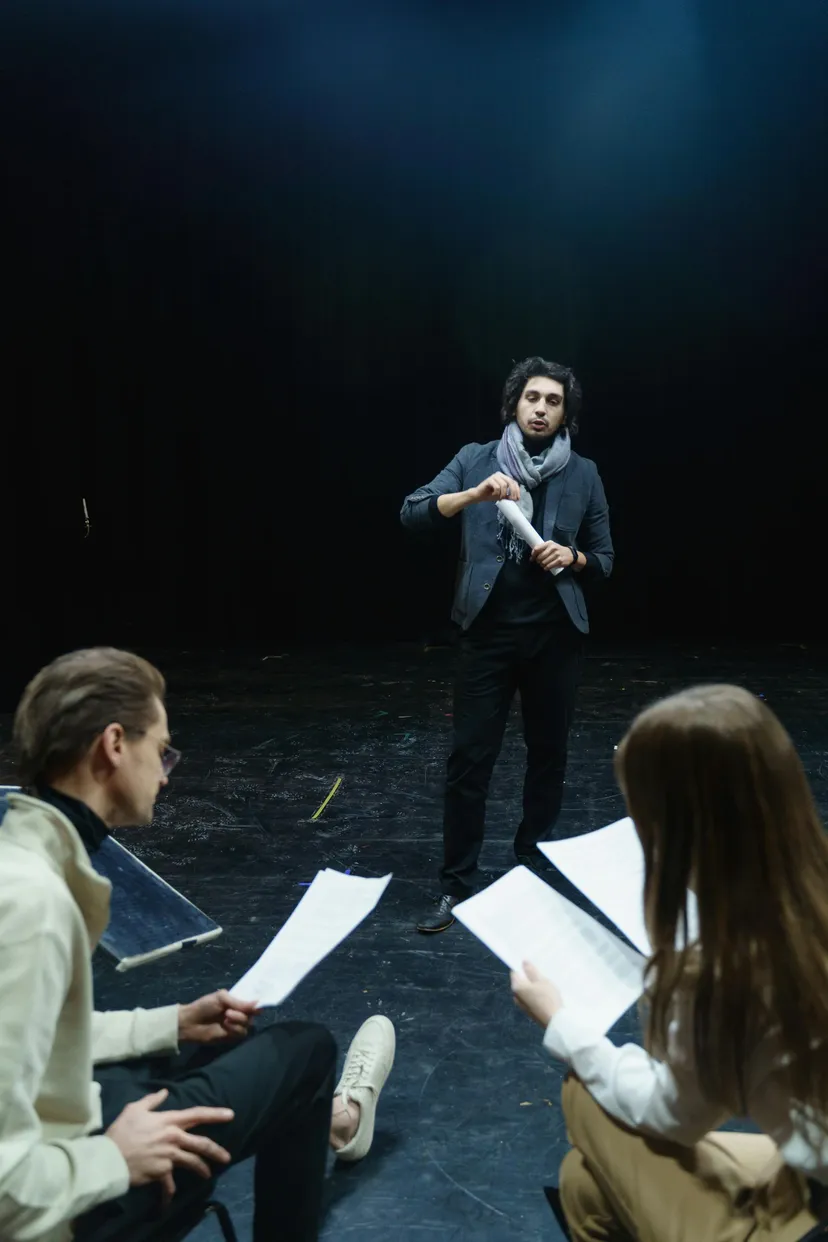
Production Management for Regional Theaters: Running an Overlapping Season with Precision
A practical guide to managing overlapping productions in a regional theater or professional company, from season architecture through AEA compliance documentation and production records.

Rehearsal Conflict Scheduling for Theater Directors: A Practical System
A step-by-step guide to building a rehearsal schedule that accounts for cast conflicts, keeps attendance reliable, and gets the production to opening night on track.
Parent Communication for Theater Programs: A Director's Framework
A practical framework for managing parent communication throughout a production, covering what to send, when to send it, and how to build the trust that makes the whole production run better.